Gut Microbiome
The Second Brain Behind Your Mood
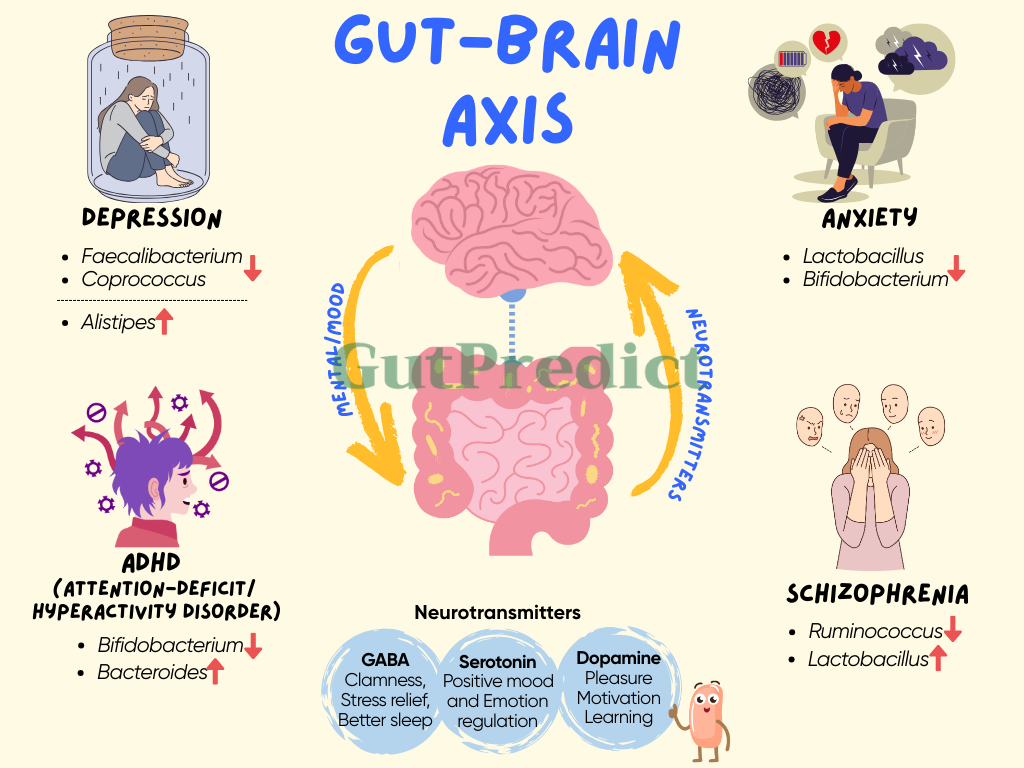
Ever felt “butterflies” in your stomach or lost your appetite from stress? That’s your gut and brain in conversation.
Your gut is sometimes called the “second brain.” Why? Because it has its own network of over 100 million nerve cells and communicates directly with your brain through the gut–brain axis. But the real stars are the microbes: gut bacteria produce chemicals like serotonin, dopamine, and GABA—the same messengers your brain uses to regulate mood, focus, and emotions . When the gut microbiome is balanced, these signals support mental well-being. When it’s disrupted, the risk of mental health problems rises.
Mental Health Conditions & Gut Microbial Shifts
Depression
People with depression often show fewer Faecalibacterium and Coprococcus (producers of short-chain fatty acids with mood-protective effects). Meanwhile, Alistipes tends to increase, a genus associated with stress and inflammation .
Schizophrenia
Gut profiles often show reduced Ruminococcus and altered Lactobacillus species . These changes may worsen gut permeability and inflammation, affecting dopamine and glutamate pathways.
ADHD
Children and adolescents with ADHD frequently have higher levels of Bacteroides and lower Bifidobacterium, . Since Bifidobacteria produce dopamine precursors, this imbalance may affect focus and impulse control.
⚠ Other Mental Health Links
- Anxiety: Some studies show reduced Lactobacillus and Bifidobacterium, bacteria known to produce calming neurotransmitters. [6]
- Alzheimer’s disease: Altered gut microbes like increased Escherichia/Shigella have been linked to inflammation that may accelerate cognitive decline. [7]
What’s New in Gut–Brain Science
The gut–brain axis is one of the fastest-growing areas in science. Current research highlights psychobiotics (probiotics designed to support mood and stress resilience), Mediterranean-style diets linked with lower depression risk, and personalized microbiome testing for conditions like anxiety and ADHD. Early-life microbiome care, along with lifestyle factors such as sleep and exercise, are also being recognized as powerful tools to support mental well-being.
“A healthier gut could mean a healthier mind.”
References
- Cryan JF, et al. (2020). The microbiota–gut–brain axis. Nat Rev Microbiol, 18:701–716.
- Valles-Colomer M, et al. (2019). The neuroactive potential of the human gut microbiota in quality of life and depression. Nat Microbiol, 4:623–632.
- Zheng P, et al. (2019). Gut microbiome in schizophrenia. Front Neurosci, 13:835.
- Wang LJ, et al. (2023). Gut microbiome and ADHD in adolescents. Front Neurosci, 17:1151478.
- Biocodex Microbiota Institute (2023). Gut-brain axis and ADHD in adolescents.
- Clapp M, et al. (2017). Gut microbiota’s influence on mental health. Clin Pract Epidemiol Ment Health, 13:150–156.
- Saji N, et al. (2019). Gut microbiome and Alzheimer’s disease pathology. Front Neurosci, 13:83.