Rebalance Your Gut Health
Your gut is like a living ecosystem. Sometimes, factors like poor diet, stress, antibiotics, or lack of sleep throw it out of balance—a state called dysbiosis—where harmful microbes dominate and good ones dwindle [1]. But here's the uplifting part: your microbiome is surprisingly plastic—that means it can change for the better with care.
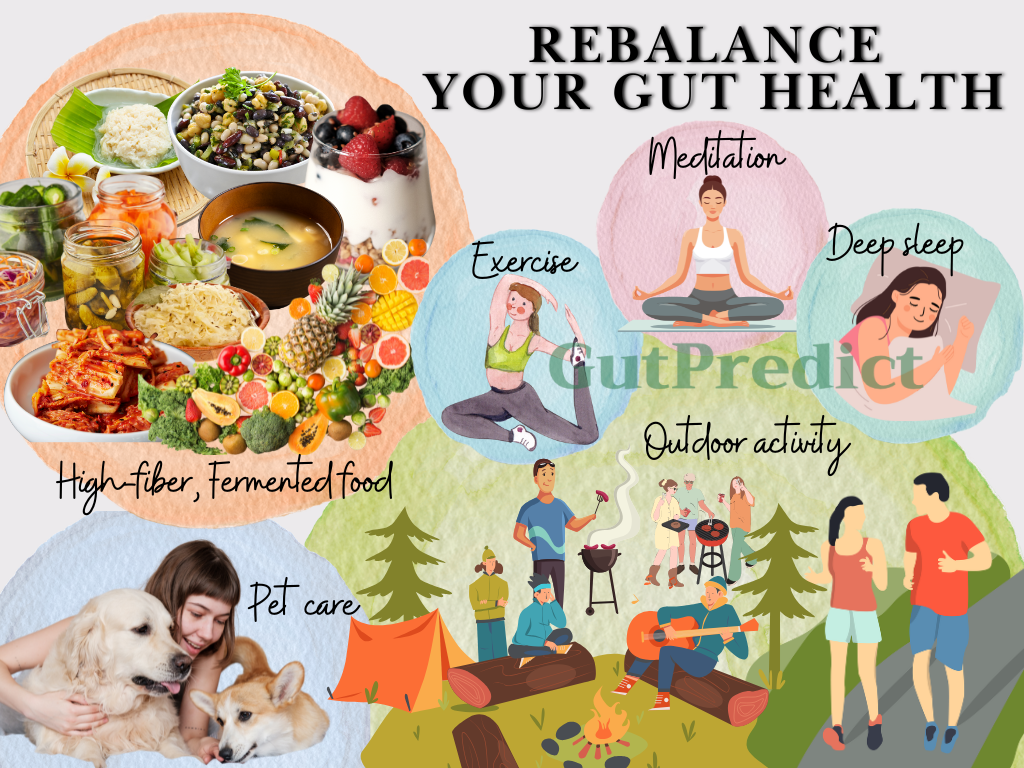
To bring your gut back to health, think of it like nurturing a garden
Focus on fiber-rich fruits, vegetables, whole grains, and legumes to nourish beneficial bacteria.
Add fermented foods like yogurt, kimchi, sauerkraut, kefir, or miso to introduce live probiotics. [2]
Spend time outdoors—microbes from soil, plants, and fresh air support your internal ecosystem. [3]
Practice stress management, quality sleep, and regular movement to reinforce a stable, healthy gut. [4]
Lifestyle Matters as Much as Diet
Helps grow bacteria that produce short-chain fatty acids like butyrate, strengthening the gut lining and reducing inflammation. Active individuals often show a richer, more diverse gut microbiome compared to sedentary people. [5]
Keep the gut–brain axis in balance. Short or irregular sleep can disturb microbial composition, lowering beneficial taxa like Lactobacillus and Bifidobacterium while increasing harmful strains. [6]
Mindfulness and relaxation techniques prevent stress hormones (like cortisol) from disrupting gut barrier integrity and microbial balance. [7]
Dog owners, for example, have been shown to carry more beneficial microbes like Bifidobacteriaceae and SCFA-producing bacteria such as Coprococcus. [8][9]
Exposes you to environmental microbes that act like "natural probiotics" for your body.
Medical Intervention: Fecal Microbiota Transplantation (FMT)
In severe cases—like persistent infections or serious gut imbalances—experts sometimes use Fecal Microbiota Transplantation (FMT). This is where healthy donor microbes are transferred into a patient’s gut to reboot the microbial community. It’s hugely effective (over 85–90%) for treating recurring C. difficile infections and is being tested for other conditions too [10], [11]. While FMT might sound a bit wild, doctors are refining it with safer protocols, standardized screening, and even stool banks [12].
“Tend your gut as you would a garden—variety, care, and patience bring it back to life.”
References
- Carding S, Verbeke K, Vipond DT, Corfe BM, Owen LJ. (2015). Dysbiosis of the gut microbiota in disease. Nat Rev Gastroenterol Hepatol, 12:220–230.
- Better Health Channel. (2024). Gut health. Victorian State Government.
- Callahan BJ, Topçuoğlu BD. (2025). Resetting the gut microbiome is a long-term project. Nature, 628:15–17.
- UCLA Health. (2023). Resetting gut microbiome is a long-term project. UCLA Newsroom.
- Barton W, et al. (2018). The microbiome of professional athletes differs from that of more sedentary subjects in composition and metabolic function. Nat Commun, 9:893.
- Benedict C, Vogel H, Jonas W, et al. (2012). Gut microbiota and sleep-wake regulation. Curr Biol, 22:963–967.
- Chrousos GP. (2009). Stress and disorders of the stress system. Nat Rev Endocrinol, 5:374–381.
- Kimura T, et al. (2022). Association between dog ownership and gut microbiota in elderly adults. PLoS One, 17:e0278105.
- Song SJ, et al. (2013). Cohabiting family members share microbiota with one another and with their dogs. eLife, 2:e00458.
- van Nood E, Vrieze A, Nieuwdorp M, Fuentes S, Zoetendal EG, de Vos WM, et al. (2013). Duodenal infusion of donor feces for recurrent Clostridium difficile. N Engl J Med, 368:407–415.
- Allegretti JR, Mullish BH, Kelly C, Fischer M. (2022). The evolution of the use of faecal microbiota transplantation and emerging therapeutic indications. Nat Rev Immunol, 22:720–736.
- Mullish BH, Quraishi MN. (2025). Faecal microbiota transplantation: safer protocols and stool banks. Nature, 629:45–47.